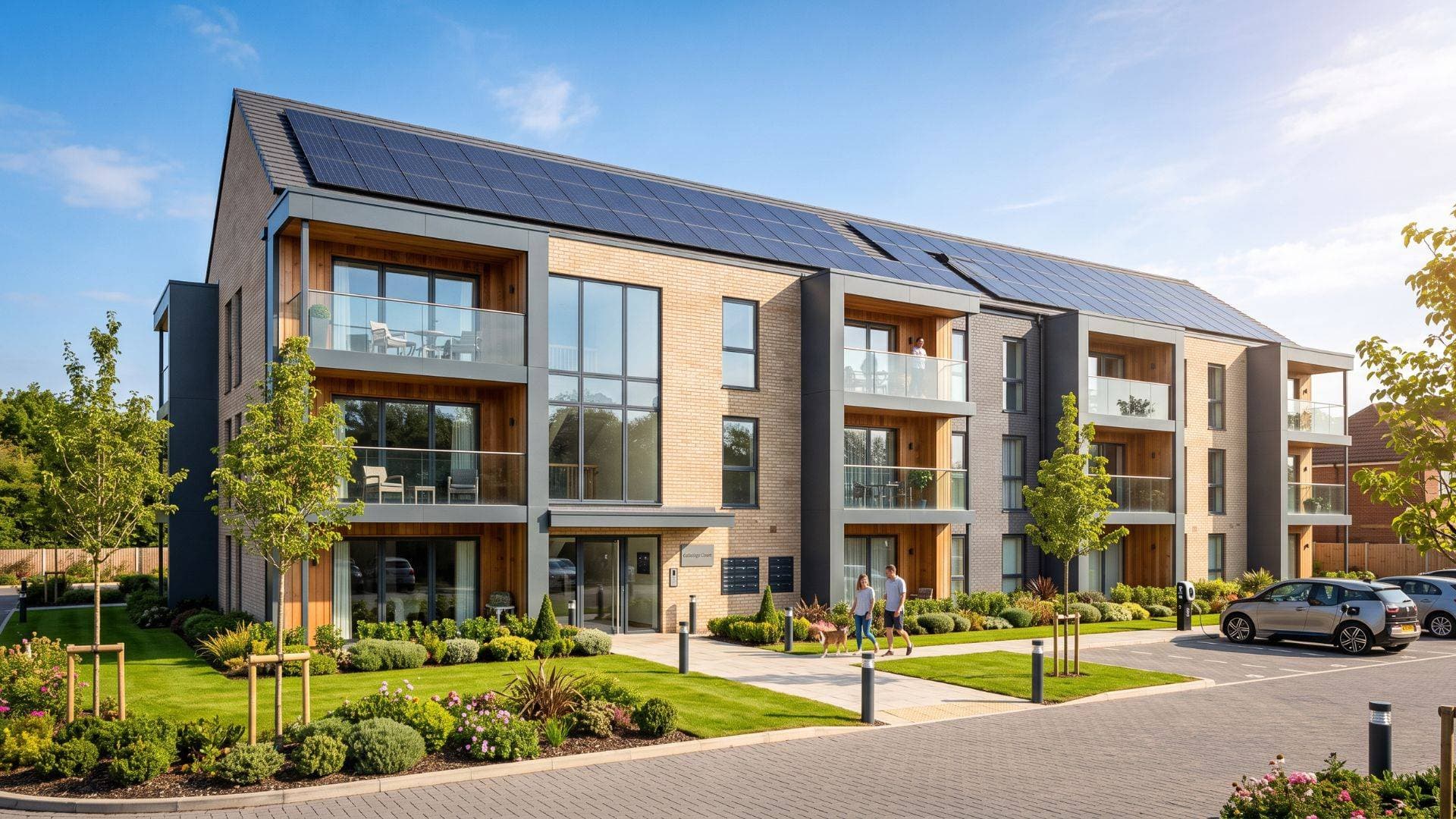
The UK is legally bound by the Climate Change Act to reach net zero greenhouse gas emissions by 2050. Scotland and Wales have set themselves interim goals of achieving net zero carbon emissions by 2040, with Scotland also aiming to reach net zero greenhouse gas emissions by 2045.
Homes are a bigger polluter than you think
How we build and power homes in the future will play a big part in reaching these goals. The Government itself admits emissions from residential buildings account for around a fifth (20%) of greenhouse gas emissions in the UK.
There are already some regulations in place that guide housebuilders towards constructing more energy efficiency homes. An example is the mandatory requirement to include EV chargers when building new homes in England and Scotland.
Now there are nationwide plans to further mandate what can and can’t be included in brand new homes. Each country is altering its own building standards, with subtle differences between each nation. One thing is across the board – we’re quickly moving towards all-electric new homes.
Energy improvement timelines
Wales will be the first country to make changes. The Welsh Building Regulations Update 2026 will come into force on 4th March 2027, with a 12-month transition period.
England will follow closely behind. Its Future Homes Standard will take effect from 24th March 2027 for new non-high risk buildings, and from 24th September 2027 for high risk buildings.
The Scottish Government is introducing a Passivhaus Equivalent standard for new homes on 31st March 2028.
What do these dates mean for buyers of new homes?
The dates listed above are when housebuilders need to change their planning and construction practices. Many energy efficient features are already incorporated into new homes but these dates make extra eco specifications a compulsory requirement.
What’s out
We’ll soon be saying goodbye to:
-
Gas and oil-fired boilers: heat-generating appliances that run off fossil fuels will not be allowed in new homes. Scotland’s New Build Heat Standard already banned new homes from having oil or gas-fired boilers back in April 2024. England’s Future Homes Standard will do the same. The Welsh Building Regulations Update 2026 will phase out gas and oil-fired boilers by ensuring they don’t meet new requirements.
-
Connecting to the gas main: most new building regulations will shift new homes to an all-electric system. This is already commonplace in high-rise residential tower blocks.
-
Draughty, ‘leaky’ homes: poorly constructed homes with thin insulation and structural gaps that let hot air out and cold air in will become a thing of the past.
What’s in
New homes of the future will likely include:
-
Energy from renewable sources: the primary source of power will come from PV solar panels, heat pumps (either air or ground source) and on-site district heat networks (localised heating systems that feed multiple homes). Most homes will still be connected to the electricity grid for back-up power.
-
Electric appliances: hobs, ovens and fires will be powered by electricity and not gas.
-
Airtight homes and MVHRs: heat loss will be reduced by installing triple glazing, more efficient insulation and airtight external doors. Mechanical ventilation with heat recovery (MVHR) systems will continuously extract stale, humid air from wet rooms, like bathrooms and kitchens, while supplying fresh, filtered air to living areas and bedrooms.
-
Hot water cylinders and waste water heat recovery systems: heat pumps can’t heat water on the spot the way combi boilers do. Therefore, warm water needs to be heated up in advance and stored in big enough volumes to run a bath or shower. Waste water heat recovery systems are a great way to ensure the heat from used hot water is extracted and reused.
Many new home developments already have an emphasis on sustainability, while EPCs help guide all movers towards energy efficient homes. Contact us if you’d like to view houses or flats that already reduce your carbon footprint and fuel bills.
Share this article
More Articles



Sign up for our newsletter
Subscribe to receive the latest property market information to your inbox, full of market knowledge and tips for your home.
You may unsubscribe at any time. See our Privacy Policy.